“Who Inherits Your Instagram? Why Digital Assets Are Changing Estate Planning”

When we think about writing a will, most of us imagine houses, cars, jewellery, or money in the bank. But what about everything we own online? From Instagram photos to cryptocurrency, our digital lives now hold real (and sometimes very valuable) assets. This is becoming one of the most interesting and fast-moving areas of private client law.
What Actually Counts as a Digital Asset?
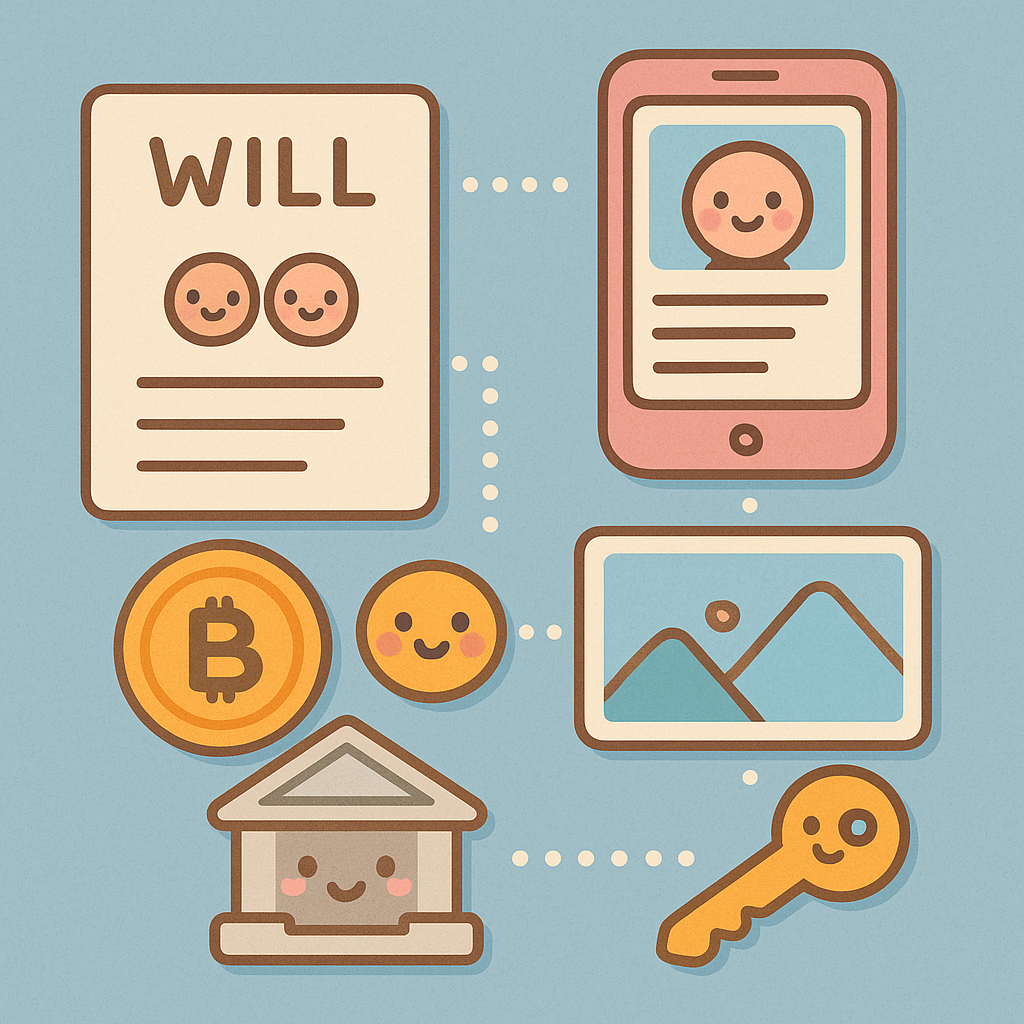
Digital assets are basically anything we own or control online that has value, whether emotional or financial. This can include:
- Cryptocurrency (like Bitcoin or Ethereum)
- Social media accounts (Instagram, Facebook, TikTok)
- Email and cloud storage
- Photos, videos, and music
- Online shops or YouTube channels
- NFTs and digital artwork
These might not feel like “property” in the traditional sense, but many people now have digital assets worth thousands of pounds and/or priceless family memories stored online.
The Legal Problem
English law hasn’t fully caught up with this yet. Most online accounts aren’t owned by users — they’re licensed under the platform’s terms of service. That means, legally speaking, you can’t just leave your Instagram or Gmail to someone in your will.
The Law Commission of England and Wales recognised this gap in its 2023 report on digital assets.¹ The report suggests that the law should treat certain digital things (such as crypto and NFTs) as a new type of personal property called “data objects.” This would make it easier to transfer and protect them under existing property law.
It’s a small but important step toward modernising how we deal with ownership in the digital world.
Why It Matters for Estate Planning
For solicitors and private client practitioners, this is a big deal. Wills and probate work are all about ensuring a person’s assets go where they want them to — and that now includes assets stored in phones, laptops, and the cloud.
Lawyers are starting to encourage clients to:
- List their digital assets ~ so executors know what’s out there.
- Secure passwords safely ~ for example, using encrypted password managers.
- Mention digital wishes in their will ~ such as whether social media accounts should be deleted, memorialised, or passed on.
- Use legacy tools ~ for example, Google’s Inactive Account Manager or Apple’s Legacy Contact feature.²
Without these steps, families can lose access to precious memories or even significant sums of money.
Why I Find This Topic So Interesting
I think this area of private client law really highlights how the law has to keep evolving alongside technology. Something as personal as a social media account might not seem “legal” at first, but in practice, it raises big questions about ownership, privacy, and inheritance.
For me, it’s exciting that wills and probate law (which is often seen as one of the most traditional areas of practice) is now dealing with issues that didn’t even exist thirty years ago. It’s a perfect example of how private client work is about people, their lives, and increasingly, their digital lives too.
References (OSCOLA)
- Law Commission of England and Wales, Digital Assets: Final Report (Law Com No 256, 2023) https://www.lawcom.gov.uk/project/digital-assets/ accessed 8 October 2025.
- Google, ‘About Inactive Account Manager’ (Google Account Help) https://support.google.com/accounts/answer/3036546 accessed 8 October 2025; Apple, ‘Manage Your Digital Legacy’ (Apple Support) https://support.apple.com/en-gb/HT212360 accessed 8 October 2025.
- See also Chris Reed, ‘Property in Digital Assets’ (2018) 77(6) Cambridge Law Journal 110; Sarah Green, ‘Digital Property and the Law of England and Wales’ (2020) Law Quarterly Review 136.