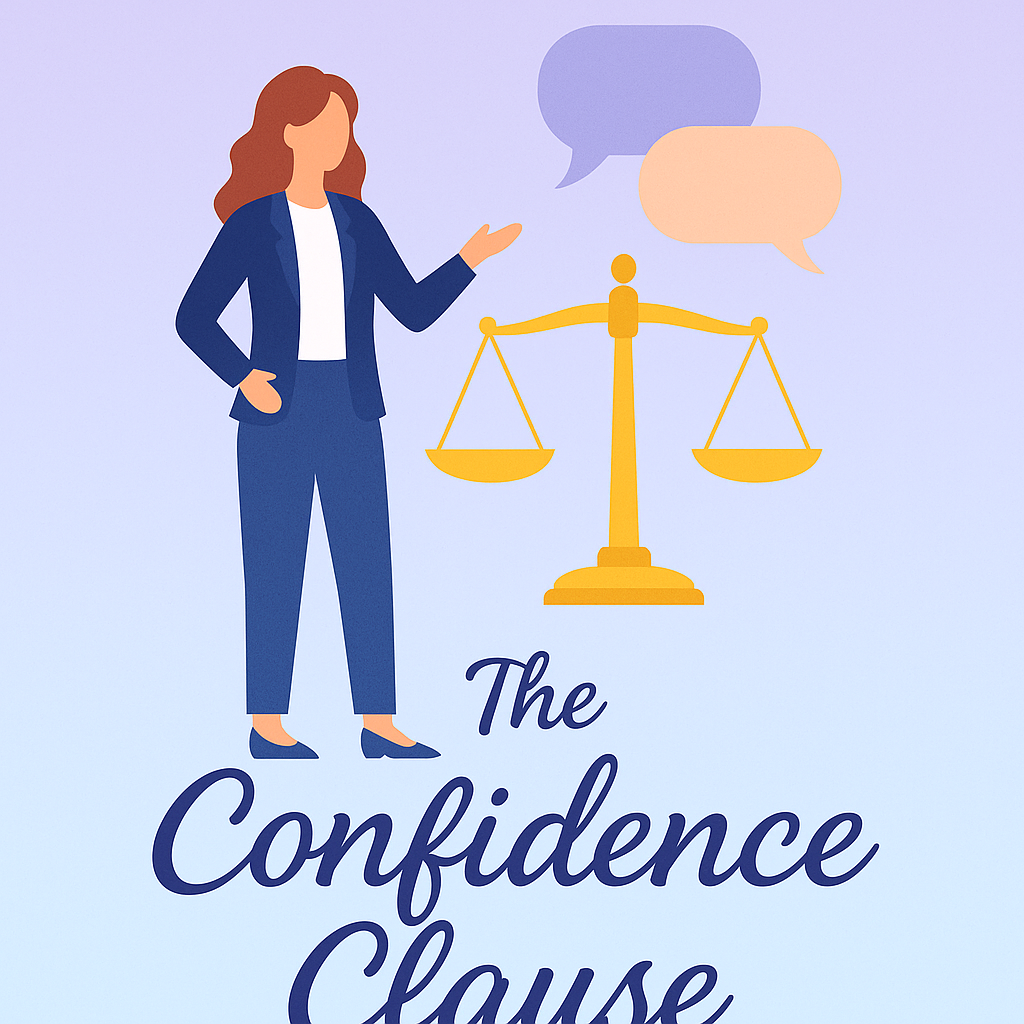
“the confidence clause: Learning to speak up as a law student”

Law degrees can feel like a constant balancing act — between confidence and uncertainty, knowledge and self-doubt, ambition and imposter syndrome.
But one of the biggest lessons I’ve learned so far isn’t from a textbook: it’s that confidence is a skill, not a personality trait. And in law, that skill matters more than we realise.
The Myth of “Natural Confidence”
It’s easy to assume that confident people are just born that way — the ones who raise their hands first in seminars or speak up effortlessly in moots. But confidence in law isn’t about volume; it’s about trusting your preparation and your voice.
I used to think confidence meant knowing everything. Now, I’ve realised it’s about being comfortable admitting what you don’t. The best lawyers aren’t those who always have the answer — they’re the ones who know how to find it.
Finding Your Voice in the Room
Whether it’s asking a question in a lecture or speaking to a partner at an event, it’s easy to feel that quiet panic — “What if I sound silly?”
But here’s the thing: every time you speak up, you’re not just contributing, you’re practising advocacy. The classroom is your first courtroom.
Each question, comment, or debate is a chance to develop the clarity and composure you’ll one day need for clients, judges, or negotiations.
Confidence in Law Is Built, Not Born
If there were a confidence clause in legal education, it would probably say something like this:
“Confidence arises where preparation meets courage.”
Confidence grows with small, consistent steps — submitting that application, volunteering to present, or even just admitting you don’t understand something (because odds are, others don’t either).
From Student to Professional
As aspiring lawyers, we’ll all face moments of doubt — in interviews, moots, or even social settings. But those moments don’t define us; they build us.
So next time your inner critic says “don’t speak up,” imagine you’re cross-examining them. Confidence, after all, is just another argument — one you can win with practice. ⚖️✨