Marley v rawlings {2014}

🔍 Behind the Will: Marley v Rawlings [2014] UKSC 2 – When a Simple Mistake Changes Everything
This week’s Behind the Will looks at Marley v Rawlings [2014] UKSC 2 — a modern classic that reminds us even the simplest will can unravel if execution goes wrong. It’s a story of human error, mirror wills, and the Supreme Court’s power to put things right.
⚖️ Case of the Week: Marley v Rawlings [2014] UKSC 2 – The Mirror Will Mix-Up
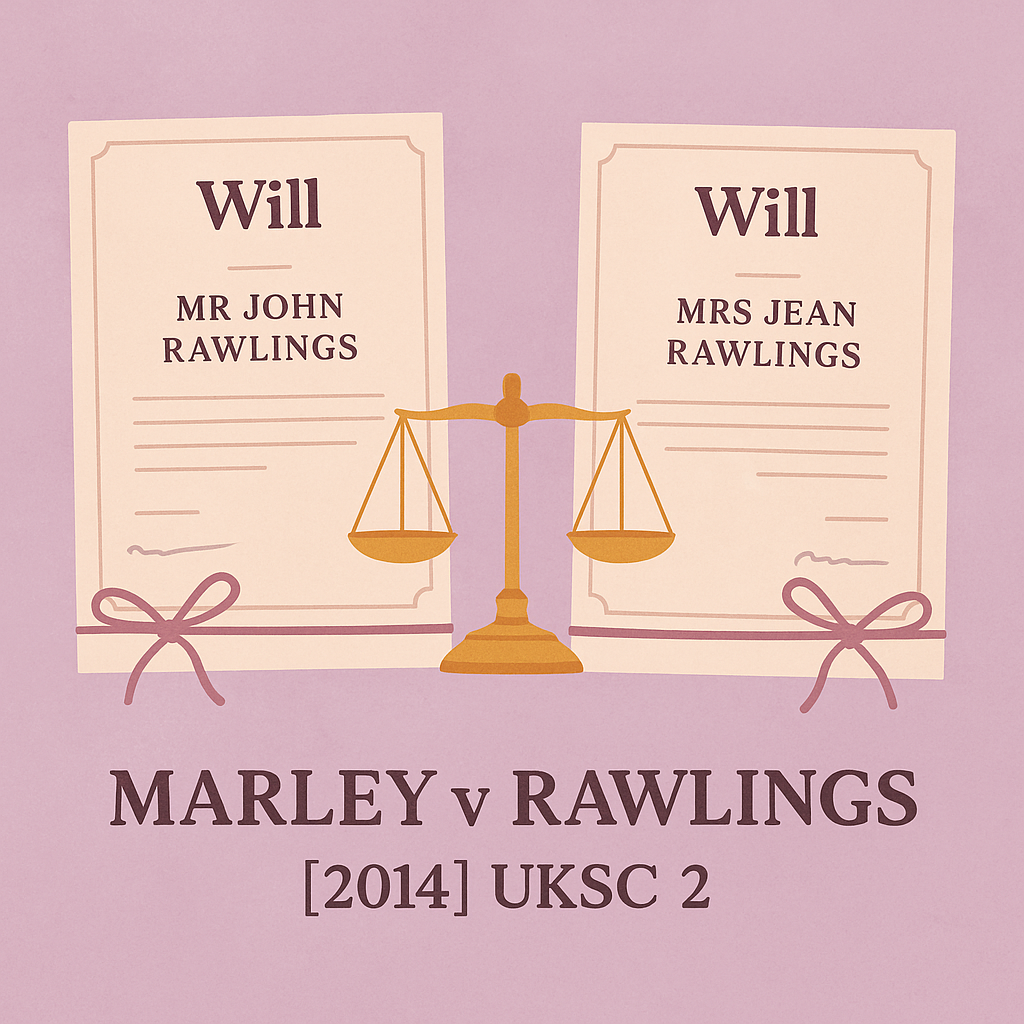
Mr and Mrs Rawlings made mirror wills, each leaving their entire estate to the other, and then to a man named Terry Marley, who was like an adopted son to them.
When the couple came to sign the wills, their solicitor handed them the wrong documents — each signed the other’s will by mistake. No one noticed the error at the time.
Years later, after both had died, the mistake came to light. Without correction, the wills were invalid, and the estate would pass to distant relatives under intestacy rather than to Mr Marley.
The Supreme Court — led by Lord Neuberger — held that the will could be rectified under section 20(1) of the Administration of Justice Act 1982. The court found that the couple had a clear and identical intention, and the solicitor’s error was merely a clerical mistake.
This landmark decision affirmed the court’s ability to correct genuine drafting or execution errors where there’s clear evidence of intent.
🔑 Key Takeaways:
1. Rectification Is Possible for Clerical Errors:
If a will fails to reflect the testator’s true intentions due to a mistake, the court can amend it under section 20(1) AJA 1982.
2. Intention Must Be Clear and Proven:
The court will only rectify where there is compelling evidence of what the testator meant to do.
3. Formalities Still Matter:
Even with rectification powers, strict execution remains crucial — mistakes are costly and often emotionally charged.
4. The Human Side of Probate:
This case is a poignant reminder that behind every will lies a story — and even good solicitors make honest errors.
💬 Practical Tip for Practitioners:
When executing mirror wills, check — and double-check — that each client signs the correct document. A two-minute review can prevent years of litigation (and a trip to the Supreme Court).
Stay tuned for next week’s Behind the Will post, where we’ll explore another unusual but important decision shaping modern inheritance law.