“paws, claws, and the law: who really owns your pet?”

Pets are family — but legally, they’re not treated that way.
Whether it’s cats, dogs, or even goldfish, pet ownership comes with more legal quirks than most people realise.
So, let’s talk about what happens when our furry (or scaly) friends become the subject of serious legal questions. 🐶⚖️
1. Who Owns the Dog After a Break-Up?
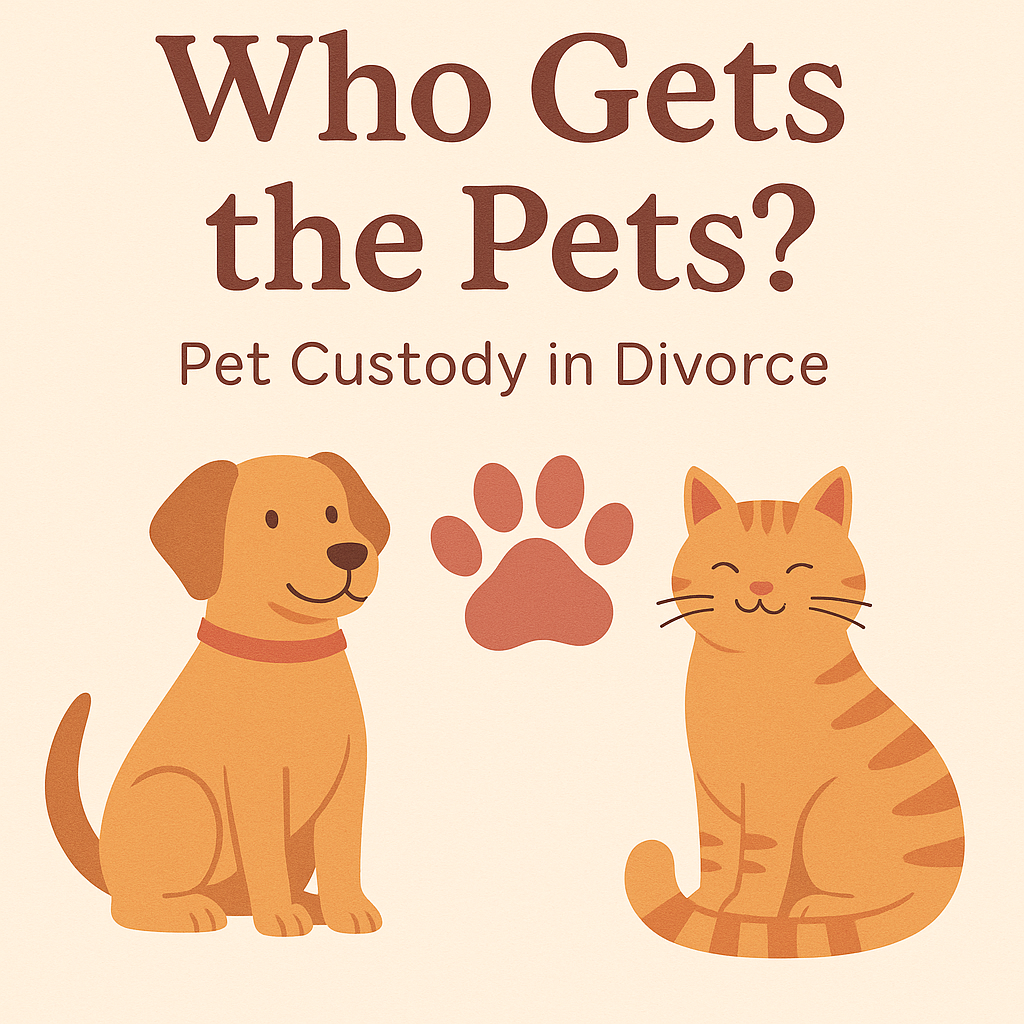
It’s one of the trickiest — and most emotional — parts of modern relationships. When couples split, who gets to keep the pet?
In England and Wales, pets are legally considered personal property — yes, like a car or a sofa. That means the person who bought or adopted the animal usually “owns” it.
However, in practice, courts increasingly acknowledge that pets are sentient beings, not just objects. Judges often look at factors like who cared for the pet, who paid for its upkeep, and what’s in the animal’s best interests (even if not officially required to).
2. Can You Inherit a Pet?
Surprisingly, yes — but not directly. Animals can’t legally own property or money, so you can’t leave your cat your estate (sorry, Mr Whiskers 🐱).
What you can do is leave money in trust for their care. This is often called a pet trust — a sum set aside to fund your pet’s needs after you’re gone, managed by a trusted person.
Fun fact: Karl Lagerfeld’s cat, Choupette, reportedly inherited millions through a similar arrangement.²
3. When Animals Go to Court
Animals can sometimes find themselves in the middle of legal disputes. From dangerous dog legislation to pet custody cases, the law regularly has to decide what happens when pets cause harm or disagreement.
For example, under the Dangerous Dogs Act 1991, certain breeds are restricted, and owners can face prosecution if their dog is deemed “dangerously out of control.”³
4. What Counts as Animal Cruelty?
The Animal Welfare Act 2006 makes it an offence to cause unnecessary suffering to animals — whether through neglect, poor living conditions, or deliberate harm.⁴
Owners have a duty of care to provide for their pets’ basic needs — food, shelter, medical treatment, and companionship. It’s not just kindness; it’s the law.
Final Thoughts
Pets bring love, chaos, and fur to our lives — and they also remind us that the law isn’t just about people. It’s about relationships, responsibility, and doing what’s right for those who rely on us.
So next time you’re curled up with your dog, cat, or lizard, remember: you’re not just a pet owner — you’re part of a very real legal relationship. 🐾💼
References (OSCOLA)
- Animal Welfare Act 2006, s 9.
- BBC News, ‘Karl Lagerfeld’s Cat to Inherit Part of His Fortune’ (21 February 2019).
- Dangerous Dogs Act 1991, s 1.