Re Park (Deceased) {1954}

⚰️ Behind the Will: Re Park (Deceased) [1954] P 89 – The Will Signed After Death
This week’s Behind the Will explores one of the strangest and most unsettling questions in probate law: can a will be valid if it’s signed after the testator’s death?
The answer — as decided in Re Park (Deceased) [1954] P 89 — is a firm no, but the story of how that question even arose makes this one of the most unusual will cases in English legal history.
⚖️ Case of the Week: Re Park (Deceased) [1954] P 89 – Too Late for Testamentary Intent
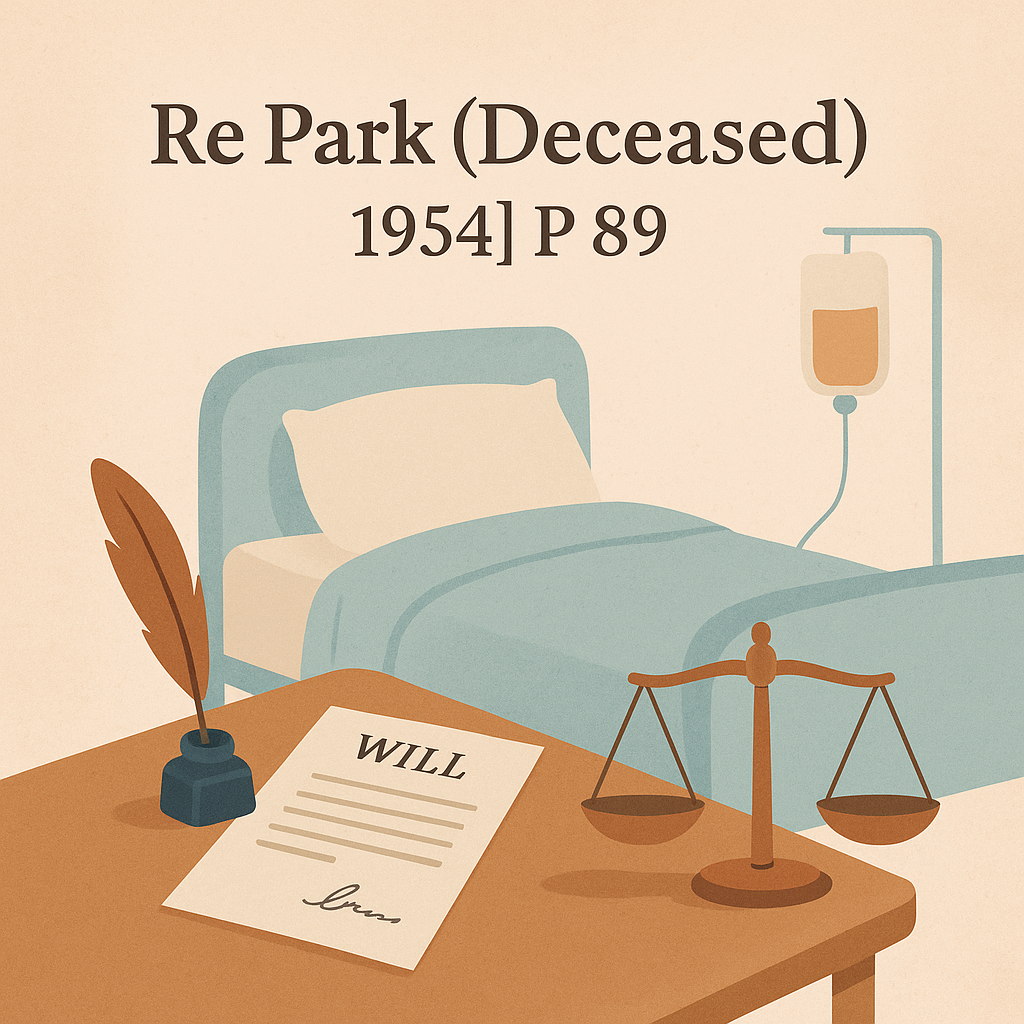
Mr Park intended to make a new will, and his solicitor duly drafted it. The document was read aloud to him while he lay gravely ill in bed. He agreed to its contents and expressed his wish to sign it immediately.
However, before the witnesses could be called, Mr Park suddenly passed away. His nurse, hoping to honour his final intentions, guided his hand across the document — after his death — to complete his signature.
The court held that despite everyone’s best intentions, the will was invalid. Testamentary acts must be completed while the testator is alive and capable of exercising their own will. The “signature” after death could not represent his volition, and therefore failed the requirements of the Wills Act 1837, s.9.
🔑 Key Takeaways:
1. Testamentary Acts End at Death:
A will must be executed by a living person. Any signature or acknowledgment after death has no legal effect.
2. Intention Is Not Enough:
Even clear testamentary wishes cannot substitute for compliance with the statutory formalities.
3. Human Sympathy, Legal Rigour:
The case shows how compassion for the deceased’s intentions cannot override strict legal rules of execution.
4. Timing Is Everything:
For solicitors, this is a stark reminder: if a client is critically ill, execution must be prioritised immediately and properly witnessed.
💬 Practical Tip for Practitioners:
Always have witnesses ready when attending an ill or elderly client. Delays can mean the difference between a valid will and intestacy — no matter how clear the testator’s wishes.
Stay tuned for next week’s Behind the Will post, where we’ll explore another fascinating case showing how even the best intentions can collide with the strict letter of the law.